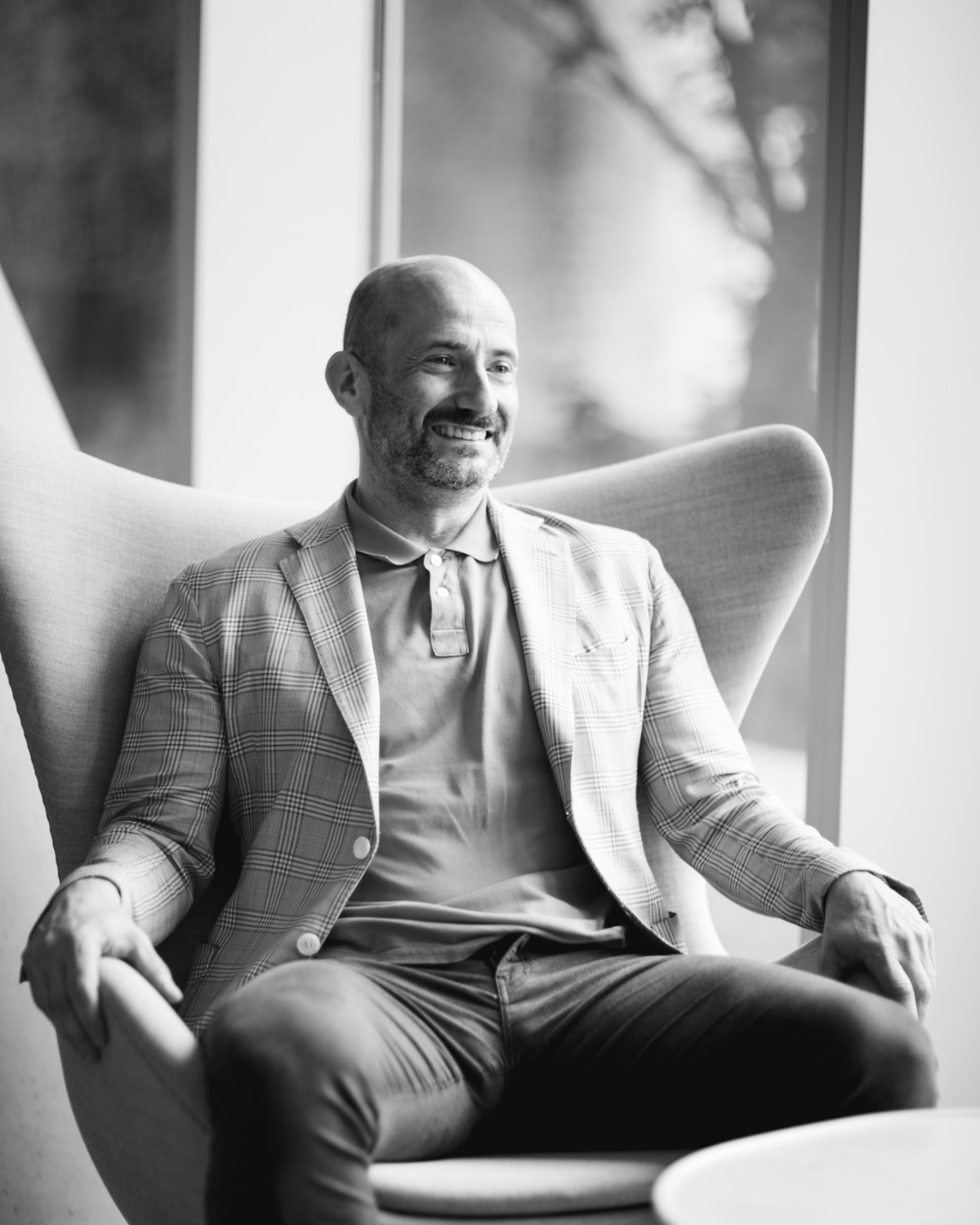
Each year, Law Day invites us to reflect on the role of law in shaping our society, our institutions, and our individual lives. This year’s theme, “The Rule of Law and the American Dream,” asks an important question: what makes freedom, opportunity, and progress possible? For Ben Wolkov, the answer is not found only in courtrooms or constitutional debates.
"When people talk about the Rule of Law, they tend to reach for grand language, courthouses, justice, constitutionality. I think about it differently.
In my life, I have lived in several countries, each with a different culture. Each of those places taught me something about what law is and isn't. In some, the law is a published rulebook that may or may not apply on a given Tuesday. In others, it's the quiet architecture that makes ordinary life possible, the reason a contract gets honored, a deal closes, a family business passes to the next generation without a fight that consumes it. The American Dream, the version that actually works, isn't really about ambition. It's about the boring, beautiful predictability of a system where the rules are knowable and roughly the same for everyone in the room.
That's what I do for a living. I'm a transactional lawyer. I don't argue in front of juries or write op-eds about justice. I draft, I negotiate, I close. The Rule of Law in my day-to-day looks like a purchase agreement that holds up when a deal goes sideways, a cap table that protects a founder who didn't know what she was signing three rounds ago, a cross-border structure that lets a Latin American family invest in the U.S. with confidence that what's promised on paper is what they'll get. It's not always sexy work. It's also the connective tissue of the economy, but when it fails, when documents are sloppy, when counsel cuts corners, when fiduciary duties become suggestions, real people lose real things.
Attorneys protect freedom in two ways, I think. The obvious way is the courtroom, the constitutional fight, the headline case. The less obvious way—the way most of us actually spend our careers—is by being the friction in the system. We slow things down. We ask the question nobody wants asked. We tell the client what they don't want to hear. That friction is what keeps power from concentrating, what keeps deals honest, what keeps the strong from rolling over the less sophisticated. Every time a lawyer does the harder thing instead of the easier thing, the system holds. Every time we don't, it loses a little tensile strength.
The impact I hope to make is mostly local and mostly invisible. I want Caldera to be the kind of firm where clients get the quality of counsel they'd get from a global platform, with the judgment and care of people who actually know them. I want the lawyers I train to leave here thinking like owners—of their work, of their clients' problems, of their role in something larger than a billable hour. If a few of them go on to build their own firms, mentor their own associates, and treat the practice as a craft worth taking seriously, that's a contribution to the Rule of Law that I'll take over any speech.
The moment that reminded me why I chose this? It wasn't a courtroom victory or a marquee close. It was a conversation, a few years into running Caldera, with a client who told me he could finally sleep at night because he understood his own deal. He wasn't a sophisticated party. He'd been bullied in a prior transaction by lawyers who treated him like an inconvenience. We sat with him, walked him through every page, rewrote what needed rewriting, and told him plainly what he was signing and why. When he said he could sleep, I understood what we actually do for a living. We're not selling documents, we're selling the ability to rest—to trust that the rules will hold, that the deal means what it says, that tomorrow looks roughly like what was promised today.
That, to me, is the Rule of Law. And that, to me, is the version of the American Dream worth defending."